A student notices an extra mark on a corrected test. Nobody else has spotted it. Choosing to tell the teacher may seem like a small decision, but it reveals something a report card cannot measure integrity. The importance of moral values becomes clear in moments like these, when children decide what matters beyond getting ahead.
For parents and teachers, helping children make thoughtful choices is part of preparing them for life. Marks matter, and so does the person a student becomes while earning them.
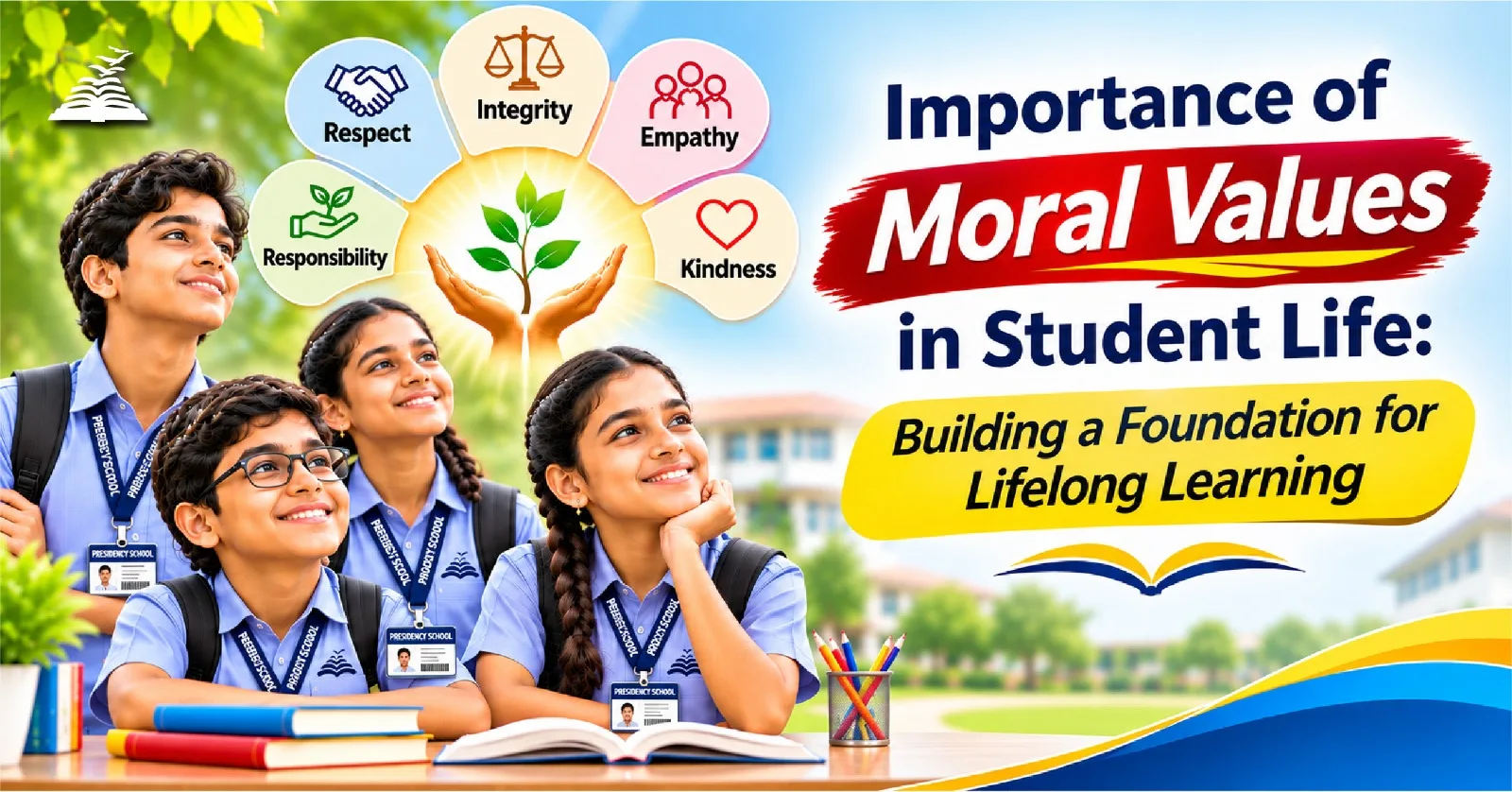
Table of Contents
What Are Moral Values, and Why Do They Matter in Student Life?
Moral values are principles that guide how we treat others, accept responsibility and judge our own actions. They help children consider whether a choice is honest, fair or harmful, even when nobody is watching.
Teaching moral values for students means connecting ideas with familiar situations: returning a borrowed book, admitting a mistake or including someone left out of a game. These experiences give children opportunities to practise trust, cooperation and consideration in everyday life.
Essential Moral Values Every Student Should Develop
Children need opportunities to practise values, rather than simply memorise their definitions. Useful moral qualities include honesty, kindness, courage, patience and fairness. Courage, for example, might mean respectfully disagreeing when friends want to exclude a classmate.
Expect gradual progress. A child can understand kindness and still speak sharply when upset. Adults can acknowledge the feeling while helping them repair the harm.
Honesty, Responsibility and Self-Discipline in Everyday Learning
Honesty includes submitting original work and acknowledging help. Responsibility means caring for shared materials and following through on commitments. Self-discipline involves managing distractions and taking the next useful step, even when a task feels difficult.
Try simple routines:
- Pack the schoolbag using a checklist.
- Set a manageable study period with breaks.
- Admit unfinished work and agree on a plan.
- Credit sources used in assignments.
The aim is growing independence, with support that gradually reduces.
Empathy, Respect and Fairness in Relationships with Others
Empathy begins with considering another person’s experience. Respect means listening without insults, including during disagreement. Fairness involves thinking about what people need; it does not always mean giving everyone identical support.
If a classmate needs extra time or assistance, discuss why that support helps them participate. Encourage children to ask before helping, share group responsibilities and challenge hurtful jokes without humiliating anyone.
How Moral Values Support Reflection, Open-Mindedness and Lifelong Learning
Learning continues when students can acknowledge uncertainty and reconsider an opinion. The importance of moral education extends to these habits: intellectual honesty helps a learner admit confusion, while humility makes feedback easier to accept.
After a disagreement or disappointing result, ask: What happened? Who was affected? What could you try differently? Reflection turns an experience into something useful. Open-mindedness allows students to examine evidence while treating people with dignity.
Practicing Moral Values Through Daily Choices, Peer Pressure and Online Behaviour
Effective value education in schools should address situations children actually encounter, including pressure to share answers, forward embarrassing photographs or join an unkind group chat.
Practice a response together: pause, consider the consequences and choose an action. A student might refuse politely, leave the conversation or seek a trusted adult. Online, encourage permission before sharing someone’s image, respectful comments and acknowledgement of others’ work.
Seeking help when someone feels unsafe is a responsible choice, not a failure of courage.
How Parents and Teachers Can Build Values Through Example and Everyday Activities
Adults teach through ordinary behaviour: apologising sincerely, keeping promises and disagreeing respectfully. When considering a CBSE school in Yelahanka, parents can ask how teachers handle mistakes, classroom conflicts and opportunities for students to take responsibility.
During a visit to a school in North Bangalore, look for patient interactions and fair expectations. At home, use stories, shared chores and family discussions to explore choices. Praise specific actions, such as returning something borrowed, rather than labelling a child “good” or “bad”.
Presidency School Bangalore North: Nurturing Values, Inspiring Future Leaders
At Presidency School Bangalore North, education goes beyond textbooks to nurture responsible, compassionate, and confident individuals. Through value-based education, engaging classroom experiences, and meaningful co-curricular activities, the school encourages students to practise honesty, empathy, respect, and self-discipline in everyday life. With a strong emphasis on academic excellence and character development, the school creates a supportive learning environment where students develop the moral values and essential life skills needed to become responsible citizens and lifelong learners.
Conclusion
Moral values shape students into responsible, compassionate and confident individuals who contribute positively to society. By practising honesty, empathy, respect and self-discipline, children develop the character needed to overcome challenges and make thoughtful decisions. Parents and teachers play an essential role in nurturing these qualities through everyday experiences and meaningful guidance. Ultimately, education should go beyond academic success, empowering students with strong principles that guide their actions, strengthen relationships and lay the foundation for lifelong learning.