Effective Safety and Security Measures protect students from physical, emotional and digital risks while enabling them to learn confidently. School safety should cover the entire journey—from leaving home and entering the campus to classroom activities, transport and dispersal.
Why School Safety Matters for Every Student
Strong safety standards reduce preventable risks, support emotional well-being and help teachers, students and parents respond calmly during emergencies.
What Safety Standards Must CBSE Schools Follow?
CBSE-affiliated institutions must follow the Board’s affiliation requirements along with applicable national, state, municipal, fire, transport and child-protection regulations.
CBSE Affiliation Bye-Laws and School Safety Guidelines
CBSE’s safety guidelines refer schools to the NCPCR manual, NDMA School Safety Policy, applicable building codes and Supreme Court directions concerning student safety.
National and Karnataka Child-Protection Requirements
Karnataka defines safety in schools broadly to include protection from abuse, violence, psychosocial difficulties, disasters, fire and transport-related risks.
Mandatory Building, Fire, Water and Hygiene Certificates
Schools must maintain valid recognition, building-safety, fire-safety, drinking-water, health and sanitation documentation issued by the appropriate authorities.
Essential Safety and Security Measures in CBSE Schools
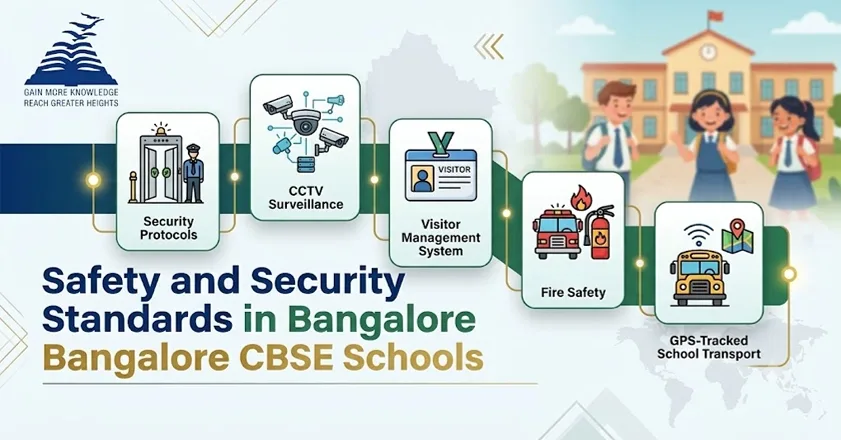
Well-designed security protocols for schools combine trained personnel, controlled access, active supervision, clear records and immediate escalation procedures.
Secure Entry, Exit and Visitor-Management Systems
A digital or manual visitor management system should record visitor identity, purpose, entry time, host approval and exit while preventing unauthorised campus access.
CCTV Surveillance in Appropriate Campus Areas
Appropriate CCTV surveillance can support monitoring and incident review at entrances, corridors and common spaces. Cameras should never be installed in toilets, changing rooms or other privacy-sensitive areas.
Trained Security Personnel and Regular Campus Monitoring
Security staff should understand emergency procedures, child-sensitive conduct, access rules and when an incident must be escalated.
Safe Student Arrival, Attendance and Dispersal Procedures
Schools should record attendance promptly and release younger students only to authorised parents, guardians or transport representatives.
Building and Infrastructure Safety Standards
Infrastructure should be inspected regularly so that structural, electrical, accessibility and maintenance concerns are corrected before they endanger students.
Structurally Safe Classrooms and School Buildings
Classrooms, roofs, walls, gates and activity areas should comply with applicable building requirements and remain free from visible hazards.
Clearly Marked Emergency Exits and Evacuation Routes
Exit signs, assembly points and evacuation maps should remain visible, unobstructed and understandable to students.
Safe Staircases, Railings, Electrical Systems and Play Areas
Staircases require secure railings, electrical installations need protective covers and play equipment should be age-appropriate and well-maintained.
Child-Friendly and Accessible Facilities for Students with Disabilities
Ramps, accessible toilets, suitable pathways and other reasonable facilities should support safe and dignified participation.
Fire Safety and Emergency Preparedness
Preparedness requires functioning equipment, trained staff, established responsibilities and regular practice—not certificates alone.
Fire Extinguishers, Alarms and Valid Safety Certification
Effective fire safety measures in schools include suitable extinguishers, alarms, clear exits, current certification and periodic inspection by competent authorities.
Regular Fire, Earthquake and Evacuation Drills
Drills help students and staff practise evacuation without panic and reveal weaknesses in emergency arrangements.
School Disaster-Management and Emergency-Response Plans
Plans should identify hazards, response teams, evacuation procedures, assembly areas, emergency contacts and support for children requiring assistance.
Child Protection and Safeguarding Measures
Safeguarding policies should clearly explain acceptable conduct, reporting responsibilities, student support and action following a complaint.
POCSO Awareness and Child-Protection Policies
Staff must understand child-protection responsibilities, including mandatory reporting obligations under the POCSO Act. Age-appropriate awareness should help children recognise unsafe behaviour and seek help.
Background Verification of Teachers, Staff and Support Personnel
Schools should verify the identity, address, employment history and suitability of teachers, drivers, attendants, security staff and contractual workers.
Safe Recruitment and Staff Code-of-Conduct Practices
Recruitment should include reference checks and written expectations regarding professional boundaries, communication and physical contact.
Confidential Reporting and Grievance-Redressal Systems
Students and parents need accessible channels for raising concerns without retaliation, humiliation or unnecessary disclosure.
Preventing Bullying, Harassment and Discrimination
Prevention requires consistent rules, supervision, awareness and timely intervention rather than action only after a serious incident.
Anti-Bullying Policies and Prompt Intervention
Schools should define bullying, document complaints, protect affected students and respond proportionately after a fair inquiry.
Creating an Inclusive and Emotionally Safe School Culture
Respectful language, inclusive activities and clear expectations can reduce discrimination and encourage students to report concerns.
Counselling and Well-Being Support for Students
Trained counsellors can support children experiencing anxiety, bullying, family difficulties, academic stress or behavioural changes.
Health, Hygiene and Medical Safety Standards
Health provisions should address routine hygiene, first aid, illness management, food safety and emergency medical assistance.
Clean Drinking Water, Washrooms and Food-Service Areas
Drinking water should be tested as required, while washrooms, kitchens and dining spaces need regular cleaning and safe waste disposal.
First-Aid Facilities and Trained Staff Members
Accessible first-aid supplies and trained personnel allow schools to provide immediate assistance until professional medical care becomes available.
Procedures for Illness, Injury and Medical Emergencies
Schools should document incidents, contact parents promptly and maintain emergency information for students with known medical conditions.
Safe and Hygienic Laboratories, Libraries and Activity Areas
Laboratories require supervision, labelled chemicals, protective equipment and controlled access, while furniture and equipment in other areas need regular inspection.
School-Transport Safety Standards in Bangalore
School-owned and contracted vehicles should comply with applicable transport requirements and be monitored by the institution.
Qualified Drivers, Trained Attendants and Staff Verification
Drivers need valid licences and appropriate experience, while attendants should understand supervision, emergency response and student handover.
GPS Tracking, Speed Control and Emergency Equipment
GPS-Tracked School Transport can provide route visibility, but it should be supported by speed monitoring, communication systems and appropriate emergency equipment.
Safe Boarding, Drop-Off and Student-Handover Procedures
Designated stops, attendance records and authorised handovers help prevent children from being left unattended or released incorrectly.
Regular Inspection and Maintenance of School Vehicles
Tyres, brakes, doors, emergency exits, lights and safety equipment should be inspected and maintained on schedule.
Cyber Safety and Responsible Technology Use
Digital protection should be integrated into classroom supervision, platform selection, acceptable-use rules and student awareness.
Supervised Access to Computers and the Internet
CBSE states that computer laboratories should provide adequate cyber-safety provisions and allow students access under teacher supervision.
Protection Against Cyberbullying and Inappropriate Content
Schools should use age-appropriate controls and teach students how to block, preserve evidence and report harmful online behaviour.
Student-Data Privacy and Secure Digital Platforms
Access controls, secure passwords and limited data collection can reduce unauthorised exposure of student information.
Digital-Safety Awareness for Students, Teachers and Parents
Regular sessions should address privacy, scams, passwords, misinformation, online conduct and responsible sharing.
Safety Standards for Sports, Laboratories and School Trips
Schools should conduct risk assessments, obtain appropriate consent, provide qualified supervision and carry emergency contacts and medical information during activities and excursions.
How Teachers and Staff Contribute to Student Safety
Every staff member should understand that safety is a shared responsibility extending beyond designated security personnel.
Training in First Aid, Child Protection and Emergency Response
Periodic training prepares employees to respond appropriately to injuries, disclosures, evacuation alarms and other emergencies.
Recognising and Reporting Signs of Abuse or Distress
Staff should notice behavioural or physical warning signs, respond sensitively and follow prescribed reporting procedures without conducting informal investigations.
How Schools Should Communicate with Parents During Emergencies
Schools need verified contact records and predefined communication channels for sharing timely, factual instructions without exposing confidential student information.
What Parents Should Check During a School Campus Visit
Parents comparing the best CBSE schools in Bangalore should look beyond visible security equipment and ask how policies operate during an ordinary school day.
Verify Safety Certificates and CBSE Affiliation
Families evaluating the top CBSE schools in Bangalore should review affiliation status and current building, fire, water and sanitation certificates.
Observe Entry, Dispersal and Visitor-Control Procedures
Watch whether guards verify visitors, gates remain supervised and students are released through an orderly process.
Inspect Transport, Medical and Emergency Facilities
Parents searching for the best schools in Yelahanka should examine vehicle arrangements, first-aid facilities, exits, assembly areas and emergency equipment personally.
Ask About Safeguarding, Bullying and Complaint Policies
Request clear explanations of whom children can approach, how complaints are recorded and how confidentiality is protected.
Red Flags Parents Should Not Ignore When Evaluating a School
Warning signs include expired certificates, unrestricted entry, unsafe infrastructure, poorly supervised transport, unclear reporting channels and reluctance to discuss previous incidents or corrective action.
Questions Parents Should Ask About School Safety and Security
Families reviewing the top play schools in Bangalore should ask who receives children, how staff are verified, how emergencies are communicated and how young learners are supervised during washroom visits and dispersal.
Building a Safe, Supportive and Prepared School Community
A genuinely safe school combines compliant infrastructure with alert employees, informed parents and empowered students. Regular review, transparent communication and respectful relationships turn written policies into dependable everyday protection.
Creating a Safe and Secure Environment for Confident Learning
Safety and security are among the most important factors parents consider when choosing a CBSE school in Bangalore. At Presidency School Bangalore North, student well-being is supported through a structured school environment that promotes careful supervision, clear safety procedures, responsible campus management, and age-appropriate awareness among students. From maintaining disciplined entry and exit practices to encouraging safe behaviour in classrooms, activity areas, transport, and common spaces, the school works to create an environment where children can learn with confidence and parents can feel reassured. By combining academic excellence with a strong culture of care, responsibility, and vigilance, Presidency School Bangalore North ensures that student safety remains an integral part of the overall learning experience.
Conclusion
School safety is not defined by CCTV cameras, security guards, or certificates alone; it depends on how consistently every safeguard works in practice. From secure entry systems and trained staff to transport monitoring, child protection, emergency preparedness, cyber safety, hygiene, counselling, and transparent communication, every layer contributes to a child’s sense of security. Parents evaluating the best CBSE schools in Bangalore should therefore look beyond visible infrastructure and understand how safety policies are implemented during everyday school routines. A truly secure school is one where students feel protected physically, emotionally, and digitally—and where teachers, parents, and school leaders share responsibility for creating a vigilant, supportive, and prepared learning environment.