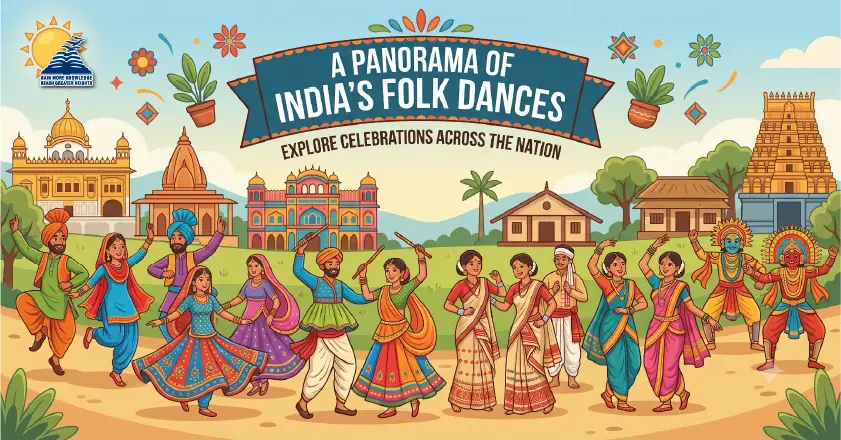
India is a land of languages, festivals, costumes, music, and traditions. One of the most joyful ways to understand this diversity is through the folk dances of India. These dances are performed by communities across villages, towns, and regions to celebrate harvests, weddings, religious festivals, seasons, and important social occasions. Every folk dance has its own rhythm, costume, story, and cultural meaning.
What are Folk Dances?
To understand what are folk dances, students should know that these are traditional dances created and performed by common people within a community. They are usually passed down from one generation to another. Folk dances are not always taught through formal training; many children learn them by watching elders perform during festivals, fairs, family functions, and village celebrations.
Introduction to the Rich Folk Dance Traditions of India
Indian Folk Dances reflect the lifestyle, beliefs, occupations, celebrations, and emotions of different communities. Some dances show joy after a good harvest, while others express devotion, bravery, romance, nature worship, or community bonding. From Punjab’s energetic Bhangra to Assam’s graceful Bihu and Gujarat’s colourful Garba, folk dances bring people together through rhythm and movement.
Why Folk Dances Are Important in Indian Culture
A List of Folk Dances of India helps students understand how beautifully different states preserve their traditions. Folk dances keep local stories, costumes, songs, musical instruments, and community values alive. They also teach children respect for cultural diversity. When students learn about folk dances, they understand that India’s strength lies in its many traditions living together.
Different Types of Folk Dances Across India
The Traditional Folk Dances of India can be grouped according to regions, occasions, and communities. Some dances are performed during harvest festivals, some during weddings, some during religious celebrations, and some by tribal communities. Many dances are performed in groups, making them lively, colourful, and full of energy.
Famous Folk Dances of North India
The Types of Folk Dances in India are beautifully seen in North India. Bhangra and Giddha from Punjab are performed during harvest and festive occasions. Ghoomar from Rajasthan is known for graceful circular movements and colourful costumes. Nati from Himachal Pradesh is performed in groups during local celebrations. Rouf from Jammu and Kashmir is a gentle dance often performed by women during festivals.
Popular Folk Dances of South India
The Traditional Dance Forms of India in South India are rich in rhythm, devotion, and community spirit. Dollu Kunitha from Karnataka is a powerful drum-based folk dance. Kolattam from Tamil Nadu uses sticks and group formations. Theyyam from Kerala combines dance, costume, ritual, and storytelling. Lambadi dance from Telangana and Andhra Pradesh reflects the vibrant culture of the Lambadi community.
Traditional Folk Dances of East India
East India has many expressive and joyful folk-dance forms. Bihu from Assam celebrates the harvest season with lively steps and traditional music. Chhau, performed in parts of West Bengal, Odisha, and Jharkhand, uses masks, martial movements, and dramatic storytelling. Jhumur from eastern India is performed during festivals and social gatherings. These dances show the close connection between people, nature, and community life.
Colourful Folk Dances of West India
Western India is known for festive and energetic Cultural Dances. Garba and Dandiya Raas from Gujarat are performed during Navratri with circular movements, claps, and sticks. Lavani from Maharashtra is known for expressive music and graceful movements. Koli dance represents the fishing community of Maharashtra. Kalbelia from Rajasthan is performed by the Kalbelia community and is admired for its flowing movements.
Folk Dances Performed During Festivals and Celebrations
In many top CBSE schools in Bangalore, students learn about folk dances through cultural programmes, annual days, assemblies, and festival celebrations. Folk dances are often performed during Pongal, Baisakhi, Navratri, Onam, Bihu, Diwali, Holi, and regional harvest festivals. Such performances help students experience Indian culture in a lively and memorable way.
Difference Between Classical Dance and Folk Dance
The best CBSE schools in Bangalore often teach students the difference between classical and folk dance through simple comparisons. Classical dances usually follow strict rules, formal training, specific hand gestures, and traditional theory. Folk dances are more community-based, simple, flexible, and connected to everyday life.
| Point of Difference | Classical Dance | Folk Dance |
| Training | Requires formal training | Often learned within the community |
| Rules | Follows strict techniques | More flexible and natural |
| Performance Style | Usually stage-based | Performed in groups and gatherings |
| Purpose | Artistic, spiritual, and traditional | Celebration, community bonding, and storytelling |
| Examples | Bharatanatyam, Kathak, Odissi | Bhangra, Garba, Bihu, Lavani |
Interesting Facts About Indian Folk Dances
Many good schools in Bangalore encourage students to learn folk dance facts because they make cultural learning more interesting. Some folk dances are linked to farming seasons, while some are connected to warriors, fishermen, shepherds, or tribal communities. Costumes, jewellery, drums, sticks, masks, and folk songs play an important role in making each dance unique.
Preserving India’s Cultural Heritage Through Folk Dance
Folk dances should be preserved because they carry the memories, values, and identity of communities. Schools, families, cultural organisations, and local artists can help children learn these traditions through performances, workshops, storytelling, and celebrations. When children understand folk dances, they also learn respect for India’s cultural richness.
Famous Folk Dances of India: Quick Reference Table
| Region | State | Famous Folk Dance |
| North India | Punjab | Bhangra, Giddha |
| Rajasthan | Ghoomar, Kalbelia | |
| Himachal Pradesh | Nati | |
| South India | Karnataka | Dollu Kunitha, Yakshagana |
| Tamil Nadu | Kolattam, Karagattam | |
| Kerala | Theyyam, Kaikottikali | |
| East India | Assam | Bihu |
| Odisha | Chhau, Gotipua | |
| West Bengal | Chhau, Jhumur | |
| West India | Gujarat | Garba, Dandiya Raas |
| Maharashtra | Lavani, Koli, Lezim | |
| Central India | Madhya Pradesh | Matki, Grida |
Celebrating India’s Rich Heritage Through Folk Dances
Learning about the list of famous folk dances of India helps students appreciate the country’s colourful traditions, regional diversity, and cultural heritage. At Presidency School Bangalore North, students are encouraged to explore traditional dance forms such as Bhangra, Garba, Ghoomar, Lavani, Bihu, Yakshagana, Chhau, Kalbelia, and Dandiya through cultural activities, performances, classroom discussions, and celebrations.
These folk dances reflect the stories, festivals, customs, and joyful spirit of different states across India, helping children develop respect for art, culture, and national identity. With a strong focus on holistic education, Presidency School Bangalore North inspires students to stay connected to India’s traditions while growing into confident, creative, and culturally aware learners.
Conclusion
Folk dances of India are colourful expressions of joy, tradition, and community life. They teach students about different regions, festivals, costumes, music, and cultural values. From Bhangra and Garba to Bihu, Lavani, Chhau, Dollu Kunitha, and Ghoomar, every folk dance tells a story of people and their way of life. Learning about these dances helps children appreciate India’s cultural diversity and understand the importance of preserving heritage for future generations.